CFS-NHERI 10-Story Building Shake Table Test Specimen: Design Updates
Jul 1, 2024· ·
0 min read
·
0 min read
Amanpreet Singh
J. Zhang
D. Rivera
M. M. Eladly
H. Jones
A. Kovac
L. Padgett
D. Rivera
K. Smith
S. Torabian
K. D. Peterman
B. W. Schafer
T. C. Hutchinson
Abstract
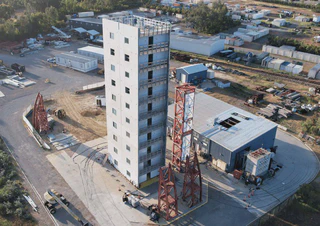
Cold-formed steel (CFS) framing offers many benefits to buildings in seismically active regions. The light weight and ductility offered by a CFS-framed structure aligns with system resiliency needs in moderate to high seismic zones. Additionally, the seismic resistance of such repetitively framed structures is unique due to large overstrength and the significant contribution of non-designated systems in the lateral response. However, the use of CFS framing for construction of mid to high-rise structures in the North American construction industry is severely restricted due to a lack of available full-scale system level test data documenting both earthquake and post-earthquake fire response. To fully utilize this form of construction and meet the growing needs of urban housing needs, a 10-story CFS-framed building, herein referred to as the CFS-NHERI 10-story building, is planned to be tested under increasing earthquake motion intensity, followed by live fire testing. The building will have a floor plan of 11.0 m×6.9 m and a consistent 3.05 m story height, and will be tested at the NHERI 6-DOF Large High-Performance Outdoor Shake Table (LHPOST6) facility at University of California, San Diego. This paper builds on an earlier design narrative, documenting the structural design and detailing advances to the test specimen, with specific focus on floor and roof diaphragm updates to embrace a modular stair system within the floor plan of the building. The stairs will ensure safe egress in and out of a building, even after a maximum considered earthquake scaled test, adopting seismically resilient connections facilitated by releases at landing levels. In addition, this paper presents the transfer plate design detailed for adapting the lateral force resisting system and stairs assembly to the unique attachment conditions of the shake table platen, as well as an innovation recently supported in the construction of the specimen, namely embracing modular building features.
Type
Publication
18th World Conference on Earthquake Engineering, Milan, Italy.
